Asset health data: a call to action for water companies
This blog was updated in March 2026.
In November 2025, we saw a step change in Ofwat’s expectations surrounding asset data. In particular, Ofwat required water companies to submit their first asset dataset as part of its roadmap for enhancing understanding asset health in the industry. Whilst this ‘soft launch’ initially focused on a subset of asset types, it’s expected that the breadth and depth of regulatory requirements will grow from here, following the wider consultation with water companies that’s been ongoing since January 2025.
Maintaining the health of core assets is crucial for ensuring long-term operational resilience in the water sector. This year, Ofwat is already putting in place requirements for water companies to report on the health of priority assets, to help maintain and improve the long-term health of their assets and facilitate appropriate investment throughout the asset lifecycle.
In this blog, we’ll outline the key requirements that are under consideration for the remainder of 2026 and how water companies can start to get themselves – and their data – ready for Ofwat’s proposed regulations on asset health.
What is Ofwat’s proposal to enhance asset health using data?
The new data initiative aims to improve the sector's understanding of asset health, focusing on a broader set of assets aligned to Ofwat’s developing Asset Data Hierarchy (ADH) over the 2025-27 period. The ultimate goal is to determine if additional base expenditure allowances are needed to address sector-wide asset health issues before PR29.
Ofwat is engaging with stakeholders through consultations this year to refine the proposal and gather feedback on various aspects, such as transition periods for certification and the scope of the asset management system. These sessions aim to develop an asset inventory, identify priority assets, and establish the kind of data needed to understand asset health comprehensively. The focus is on collecting additional asset health and condition data for a subset of assets to assess whether there is a need for additional allowances during the 2025-30 period.
Ofwat’s Asset Health Data Proposal – Key Points
We took the documentation relating to Ofwat’s asset health proposal, up to August 2025, and asked our Workplace AI Platform to summarise the key changes:
Licence Modification & ISO 55001:2024 Compliance: Ofwat intends to introduce a new licence condition that leverages international standards for asset management, specifically ISO 55001:2024. This condition will encourage water companies to attain and maintain certification, demonstrating they have appropriate systems in place for managing assets.
Asset Self-Assessment Tools: Companies are encouraged to demonstrate their asset management maturity through regular self-assessments like the Institute of Asset Management's SAM+ tool. This tool helps measure capability against asset management standards and provides a framework for continuous improvement.
Asset Condition and Health Data Collection: As part of the enhancing asset health understanding workstream, companies will collect asset condition and health data for a broader set of assets aligned to Ofwat’s developing Asset Data Hierarchy (ADH). This includes data on asset condition surveys and workload (i.e., refurbishment and replacement) data. Companies may need to provide inspection reports and data collected from a representative sample of assets to inform Ofwat's assessment of asset health.
Data Collection for Historical Workload and Expenditure: Companies will be required to provide historical workload and expenditure data for the priority assets to better understand past investments and asset health.
Ongoing Monitoring and Reporting: Companies will need to report on their compliance (with standards like ISO 55001:2024 recognised as best practice) and their progress against asset management maturity improvement plans. Ofwat is considering ways to incentivise good asset management performance and may publish companies' maturity scores to encourage improvement. Companies must also report progress against their asset management improvement plan.
When does the asset health reporting requirement come in?
The new asset health reporting proposal includes a transition period for companies to achieve compliance, with plans to bring in the new licence modifications with a phased timeline extending through 2026, in line with updated Ofwat workshops. There will be a period before companies need to comply with the new condition.
Ofwat has completed a consultation with companies to build up an asset inventory and define asset classes, establishing assets to focus on. Ofwat issued the workload and expenditure data request on 10th September 2025, asking water companies to provide data on historical workload and expenditure for priority assets.
How can water companies get their asset data ready for Ofwat’s requirements?
The new proposal features data collection and reporting as core new requirements for water companies. To help the regulator gain a holistic view of asset health and make informed decisions about interventions, the requirements look to address inconsistencies in data quality and comparability across water companies and standardise the sector’s approach to data collection.
For 2026’s immediate requirements, here’s how we recommend starting to prepare your asset health data collection capabilities.
Preparing asset health data at scale
With Ofwat’s requirements extending to cover thousands of assets and sub-assets, the incoming data reporting requirement is huge. With at least nine potential asset types to monitor, and approximately 18 health factors to maintain across these assets, there are tens of thousands of data points requiring discovery from a full array of data sources.
Accessing, collecting, and collating all necessary data points is key to accurately assess asset health under the proposed requirement. Incomplete data can lead to gaps in understanding the true condition of assets, potentially resulting in underinvestment or misallocation of resources.
To collate, integrate, and ensure data quality at this scale, data leaders need to be looking at AI-enabled automation for their data management and discovery, ready to cope with this demand and fulfil the immediate requirement to share standardised asset data at scale.
AI-powered search solutions can help specifically with:
Building a complete, navigable data picture: Connecting to disparate data sources, water companies can create a live, centralised index of core asset health data to meet the new requirement. Allowing teams to explore asset data and build the complete data picture to support asset health analysis.
Using AI and ML to classify and label data at scale: Handling multiple file types and using AI to classify and label data appropriately – think automatic extraction of part numbers, locations, sensitivity markers, and stale or duplicate data. Ready to streamline data and supply what’s needed for Ofwat’s reporting requirements.
Automating manual data processes: Reducing manual effort by automating regular data discovery and validation for dynamic data fields.
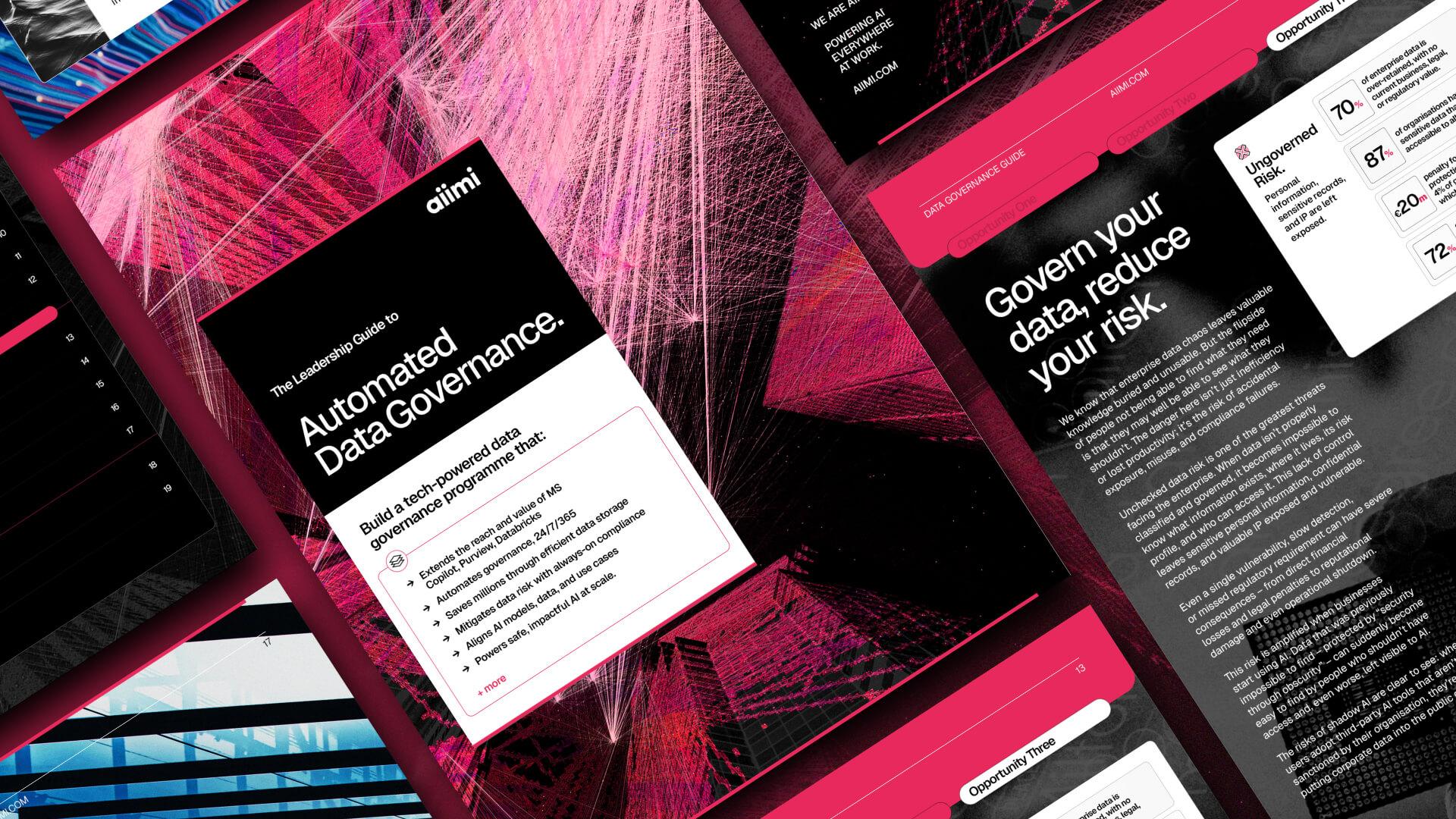
Discover how Aiimi's AI platform achieves visibility and compliance for asset health data, with our free guide: Asset Health Data in AMP8
Integrating Asset Data and Improving Data Quality
The challenges with asset data is twofold: ensuring completeness and improving quality. Data must be high quality, accurate, and reliable – not just complete.
To support both data integration and data quality, water companies can leverage AI-powered search solutions to first support with data discovery and collation, and then with improving data quality at scale.
AI-powered search solutions can help specifically with:
Discovering and extracting key attributes: Automatically identifying and extracting specific asset information from a range of unstructured document sources.
Validating and populating data in core systems: Cross-referencing this extracted data with existing records in platforms such as SAP, filling gaps and enriching the completeness of asset records.
Once all relevant data points are captured and made accessible, and data quality is improved by interconnecting and enriching records with the data already available in disparate systems, then companies can identify and address improvements needed for their asset monitoring and sensor systems.
Ofwat’s new requirements are an opportunity to invest in data
As the sector embarks on this journey to enhance asset health understanding, addressing data completeness and quality challenges is a non-negotiable – that makes Ofwat’s new requirements an opportunity to prioritise improving how you collect, manage, and use asset data in AMP8.
Ofwat’s requirements are the driving force water companies can use to make strategic investments in technology that handles asset data at scale, ensures data completeness, and improves data quality throughout AMP8 and beyond.
About Aiimi
Aiimi is a trusted data, digital, and AI partner to the water sector, working with UK water companies including Anglian Water, Northumbrian Water, and Yorkshire Water and an active member of the UK Water Partnership. In AMP7, our expert teams delivered over 180 projects in the water sector, and our Workplace AI Platform is enabling water leaders to manage, protect, and unlock the value of their data with AI.
Read more about our work in water.
Stay in the know with updates, articles, and events from Aiimi.
Discover more from Aiimi - we’ll keep you updated with our latest thought leadership, product news, and research reports, direct to your inbox.
You may unsubscribe from these communications at any time. For information about our commitment to protecting your information, please review our Privacy Policy.
Book a demo
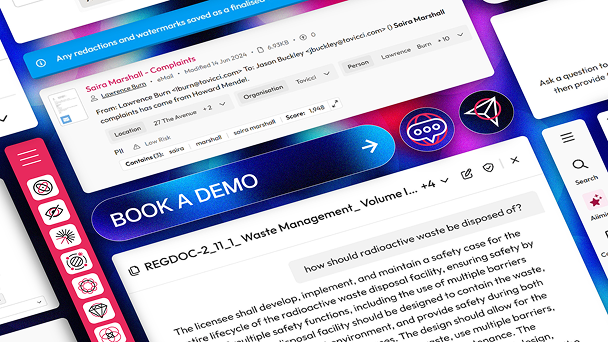
Curious about what the Aiimi platform can do for your organisation? Talk to our team or book a demo to find out how we can help.
Get in touch